

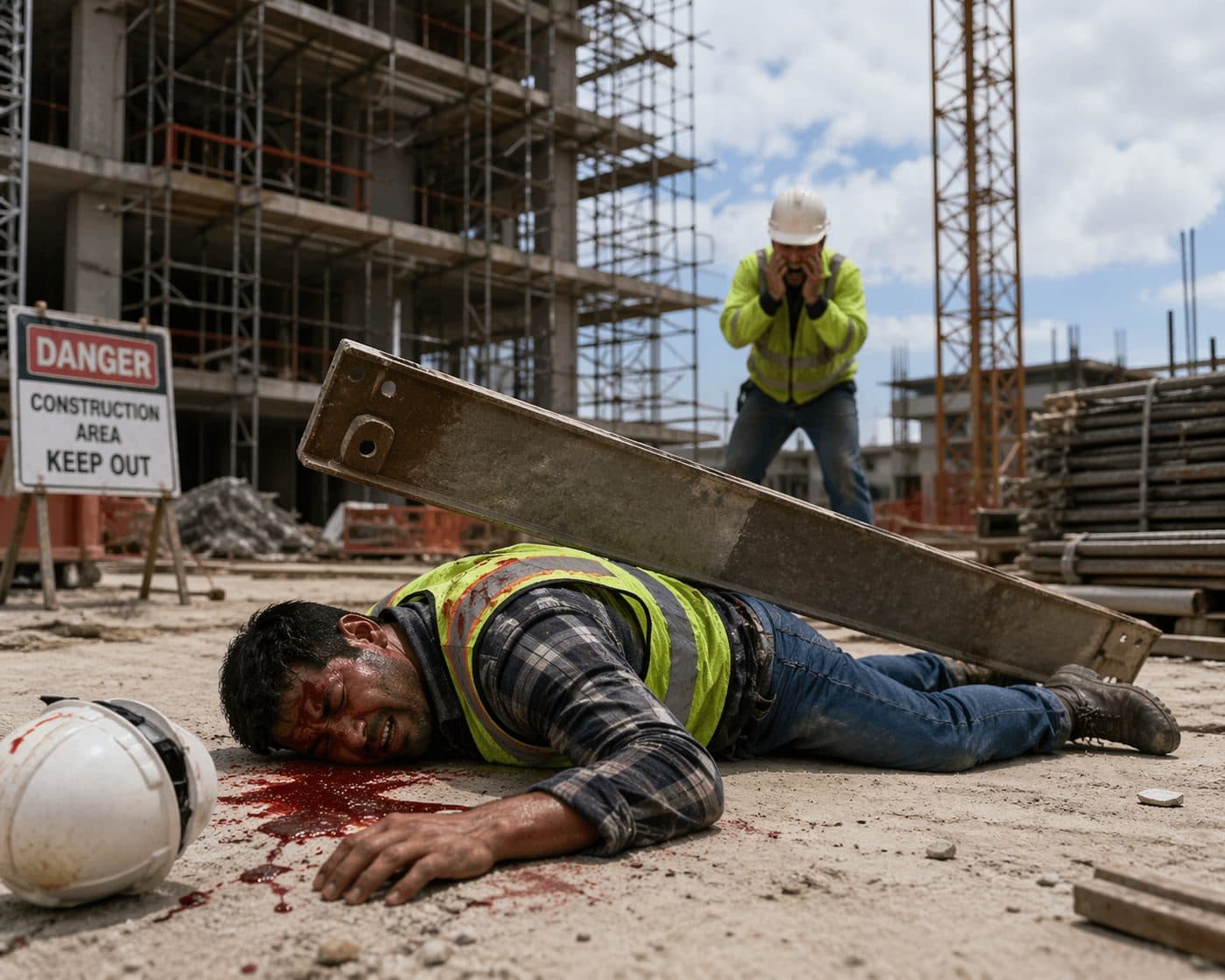
Four causes account for most construction deaths. Falls still lead.
OSHA's 'Fatal Four' framework tracks the four leading causes of construction fatalities. In Florida, the numbers align with national data — with a twist.
OSHA tracks construction fatalities through a framework known as the Fatal Four: falls, struck-by-object incidents, electrocutions, and caught-in/between events. Together, these four account for roughly three out of every five construction deaths nationally.
Falls lead — by a wide margin
Falls from elevation are the single largest cause of construction fatalities. Roofers, ironworkers, and scaffold workers carry disproportionate risk. Many of the fatal falls are preventable: inadequate fall-arrest systems, missing guardrails, and unstable ladders appear in the majority of OSHA citations.
Struck-by incidents
Falling tools, swinging loads, backing vehicles. Sites with poor traffic-control plans produce most of these. Workers' comp claims for struck-by injuries are some of the largest because the injuries — head trauma, multi-trauma — are catastrophic.
Electrocutions and caught-in/between
Electrocutions cluster in overhead-powerline incidents and improperly grounded equipment. Caught-in/between fatalities come mostly from trench collapses, equipment rollovers, and machinery pinch points.
Why the Fatal Four matter to a claim
If your injury falls inside the Fatal Four categories, OSHA citations against your employer are discoverable. Those citations — and the underlying inspection records — build the liability narrative for both comp and civil claims. Do not assume your only remedy is the comp file your employer is building.